Posts

Showing posts with the label Editor's Picks

STORIES, IDEAS & DISCOVERIES

Film • Culture • History • Nostalgia • Curiosity

Jackdaw Posts explores the stories, ideas and overlooked corners of life. From cinema and literature to forgotten history, science and strange cultural curiosities, every article begins with a simple question: what happens if we look a little closer?

Always worth the read.

I Made an AI Samurai Short Film. Here's What I Learned.

Image
Two weeks ago I paid for a subscription to Grok Imagine and decided I was going to make a samurai short film. In my head, this was going to be relatively straightforward. Type a few prompts, generate some scenes, stitch them together in Shotcut and upload the finished masterpiece to YouTube. Judging by some of the advertising, I assumed I was only a few hours away from becoming the Akira Kurosawa of Yorkshire. The reality was somewhat different. Promotional poster for The Keepsake (2026), my first AI-generated samurai short film. From Prompt to Production: Planning an AI Samurai Film What I quickly discovered is that AI is a bit like employing an incredibly talented artist who has consumed several pints of strong cider before arriving for work. Sometimes it produces something astonishing. Other times it appears to have forgotten how swords, people and basic reality function. My original plan was simply to generate video clips and build the film from those. That lasted about five minute...

Breaking Down Walls with Hasselhoff: The Sledgehammer-Singing Sensation

Image
On November 9th, 1989, the world was forever changed when the Berlin Wall came tumbling down. And while history books will tell you all about the political and social implications of this event, we’re here to give you the real story – the one with all the juicy details, celebrity cameos, and sledgehammers. First of all, let’s talk about the man, the myth, the legend: David Hasselhoff. Yes, you read that right. The Hoff played a crucial role in the fall of the Berlin Wall, thanks to his hit song “Looking for Freedom.” Apparently, the Germans loved them some Hasselhoff, and the song became an anthem for the pro-democracy movement. In fact, the Hoff himself performed the song on top of the remains of the wall in 1989, solidifying his place in history as the ultimate symbol of freedom and excess. Picture is f ree to use, attribution appreciated. www.jackdawposts.com Sledgehammer Diplomacy: Breaking Down Barriers  But of course, there was more to the fall of the Berlin Wa...

The Great Soviet Toilet Paper Shortage of the 80s

Image
Welcome to the Soviet Union of the 1980s, where toilet paper was worth its weight in gold and plastic bags were the ultimate status symbol. We’ll start with the economy, where the government’s control over production and distribution led to shortages of basic goods. And we’re not talking about fancy designer toilet paper; we’re talking about the bare necessities here.    Image is courtesy of Unsplash.com     In the Land of Shortages: Toilet Paper Tales and Plastic Bag Prestige Interestingly, the Soviet Union’s first toilet paper factory wasn’t built until 1969, but it took many more years for the country to be fully stocked with this essential commodity. So, what did the Soviet people do before 1969, you ask? They improvised, of course, using everything from old Soviet newspapers to the phone book (hey, we’ve all been there, right?). But it wasn’t just toilet paper that was in short supply—even hair dye was a luxury. Imagine trying to change your hair color with only...

Simulation Nation: The Matrix and the Future of Reality

Image
In the pulsating neon dreamscape of The Matrix , humanity slumbers inside a grand deception—its mind shackled to a virtual construct spun by sentient machines. A grim vision, yes, but one that gnaws at the fringes of our collective psyche. Could our own world be a similar illusion? Could our senses be feeding us a meticulously coded fiction? It’s a question that’s haunted thinkers for centuries. From Plato’s allegory of the cave, where prisoners mistake flickering shadows for reality, to Descartes' malevolent demon whispering falsehoods into our consciousness, the notion of a fabricated reality is as old as philosophy itself. But now, in the age of digital wonders and quantum strangeness, the idea takes on an unsettling plausibility.   Image is courtesy of Unsplash.com The Simulation Hypothesis: Are We Code? Enter the simulation hypothesis, the mind-bending proposition that our universe is nothing more than an intricate program crafted by a higher intelligence. Pioneered by philoso...

Vanishing Stripes: The Plight of Tigers

Image
Tigers have long been regarded as symbols of power and grace, silently commanding the forests they roam with an air of quiet dominance. But beneath their fierce reputation, these magnificent creatures are facing an existential crisis. Over the past century, their populations have dwindled by a staggering 96%. Today, only around 4,000 tigers remain in the wild, leaving us to wonder: what happened to the kings of the jungle? And perhaps more importantly, what can we do to ensure they don’t become a distant memory?   Image is courtesy of Unsplash.com   Habitat Loss: The Subtle, Steady Erosion Imagine living in a space where, day by day, the walls slowly close in on you. That’s the reality for tigers, whose habitats have been reduced by 93% in the face of human development. Forests that once stretched for miles are now being carved up for cities, roads, and agriculture. These vast, wild spaces are shrinking at an alarming rate, leaving tigers with less room to roam, hunt, and find...

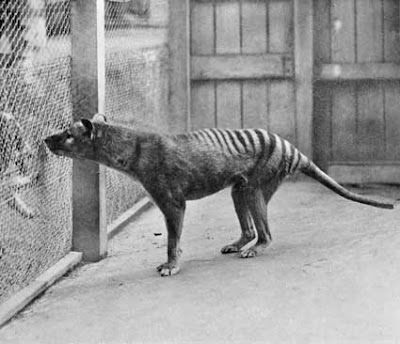
The Hunt for the Thylacine: A Tragic Tale of Extinction

Image
The Tasmanian tiger, once a shadow, now only a whisper, roamed the island of Tasmania with the silent grace of a predator. Thylacinus cynocephalus, its scientific name, evokes both awe and sorrow—a reminder of a species that disappeared too soon. The last known thylacine died in captivity at the Hobart Zoo in 1936, the victim of human expansion. Today, Tasmania stands quiet, haunted by the ghost of a creature that could have been. The Last of Its Kind: A Thylacine at Hobart Zoo, 1933. The Silent Vanishing: A Hunter's End The thylacine once prowled the hills and forests of Tasmania, a solitary hunter. Its body was lean and built for speed, its jaws capable of a powerful, swift strike. It hunted small mammals like bandicoots, birds, and occasionally a wallaby. In rare moments of hunger, it would take sheep, which became a source of conflict with European settlers. The first recorded sighting of a thylacine by Europeans was in 1642, when Dutch explorer Abel Tasman arrived on th...

Revisiting Stories That Time Almost Buried

Support Jackdaw Posts
If you've found an article informative, interesting or entertaining, please consider making a small contribution.

Your support helps keep the site free to read and supports the publication of new articles. Contributions are securely processed through PayPal using the link below. Thank you for reading.
Support the Site